Lessons From a Black-Box Robustness Tool on REST APIs
REST APIs are everywhere on the web. Platforms like Google, Microsoft, and Salesforce rely on them to let different applications talk to one another. But what happens when an API is hit with unexpected, broken, or malicious data? If the API isn't robust, it can leak database structures, crash entirely, or expose massive security flaws, leading to financial and reputational damage for the API's owner.
An IEEE research paper titled "A Black Box Tool for Robustness Testing of REST Services", shows how the researchers built an automated tool called bBOXRT to stress-test 52 real-world REST APIs. The results were surprising to see, proving that even big-name applications are often deployed with hidden defects.
Here is a breakdown of how the tool works, what it broke, and what developers can learn from it.
What Exactly is "Robustness"?
To quote the paper directly:
"Robustness is the degree to which a certain system or component can function correctly in the presence of invalid inputs or stressful environmental conditions."
The researchers chose a Black-Box approach, meaning the testing tool had zero knowledge of the underlying source code powering the APIs. It only looked at the external documentation (which is often lacking) to figure out how to interact with the service.
How bBOXRT Attacks an API:
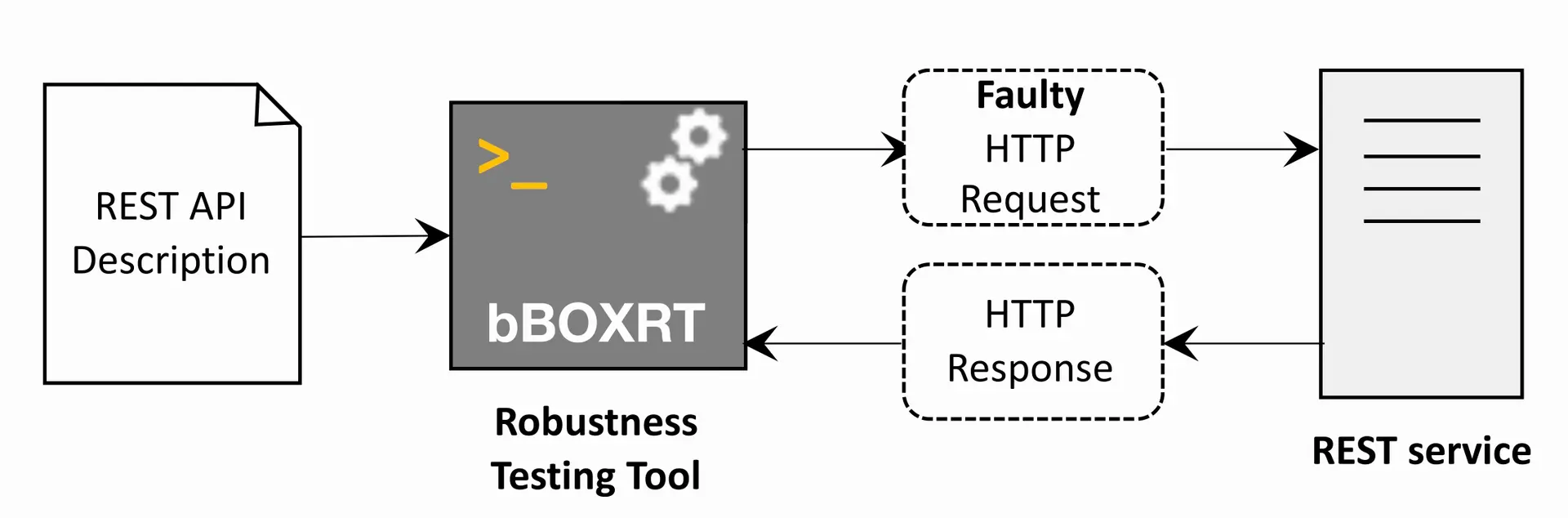
- Read the Docs: The tool scans the API documentation (like an OpenAPI specification) to map out the endpoints, HTTP verbs (GET, POST, DELETE), and expected input types.
- Send a Baseline: It sends valid requests first to establish a baseline of healthy behavior.
- Inject Faults: It systematically mutates those requests by throwing 57 different types of faults at the API. It deletes mandatory JSON fields, inputs empty values, swaps data types, and injects malicious strings.
- Map the Response: It records how the API handles the chaos.
2. Measuring the Damage: The CRASH Scale
To classify how poorly an API handled a fault, the researchers utilized the CRASH scale, which grades system failures from annoying to devastating:
| Failure Mode | What It Actually Means |
|---|---|
| Catastrophic | Total corruption. The application is broken, and a simple restart won't fix it. |
| Restart | The application hangs completely and must be forcefully terminated and restarted to recover. |
| Abort | The application abnormally terminates a specific operation mid-flight. |
| Silent | The API freezes up—it doesn't conclude the task, but it doesn't return an error message either. |
| Hindering | The API returns an error code, but the message is completely incorrect or misleading. |
3. Testing 52 Real-World APIs (The Results)
The researchers unleashed bBOXRT on 52 real-world services split across 5 distinct categories:
- Popular Services: Business-critical platforms like Google Drive, Spotify, and Trello.
- Public APIs: 40 open APIs pulled from the online database APIs.guru.
- Middleware Management: Core infrastructure tools, specifically targeting the Docker Engine API.
- Private Services: Kazoo Crossbar, a major cloud-based telecommunications/VoIP platform.
- In-House Apps: E-commerce stores and wholesale logistics applications.
Out of 1,351 tested operations, the tool generated thousands of responses, and a shocking 69,000 responses exposed severe robustness problems.
The Biggest Blunders Found in Production:
- Spotify: Triggered multiple 500 Internal Server Errors simply by passing empty parameters, null replacements, or appending non-printable characters. It even gave out an undocumented 502 Bad Gateway error.
- Google Drive: Returned a 500 error with a completely empty, null message field (known as a Hindering failure).
- Api2Pdf: When hit with a fault, it returned a 400 Bad Request status code but attached a full source code stack trace in the payload. This leaks internal code structures that malicious hackers can exploit.
- BikeWise: This API accidentally leaked a raw SQL query inside its error response, exposing critical database schema information.
- In-House Apps: Sending maximum integer boundaries or minimum boundaries minus one caused a complete Out of Memory error, crashing the system.
4. The Core Takeaways for Developers
The overwhelming majority (~97%) of the bugs found were Abort failures, heavily driven by poor input handling. If you want to make sure your REST APIs don't fall victim to these exact same bugs, focus on these three engineering realities:
- Input Validation is Non-Negotiable: The number one cause of API crashes is missing validation. Never trust user input. Explicitly handle null values, empty strings, and extreme numeric boundaries before your core code processes them.
- Clean Up Your Error Messages: Nearly half of the tested services returned non-descriptive or overly descriptive error messages. Sanitize your production errors. Your API should tell the user what went wrong without exposing stack traces, raw SQL strings, or database schemas.
- Fix Your OpenAPI Specs: Many developers treat API documentation as an afterthought. The study revealed that a huge portion of OpenAPI specs completely lacked details on how the system handles invalid inputs, which often will lead to integration issues down the line.
Looking Ahead
Automated testing is the only way to catch these residual bugs before they reach production. Moving forward, tools like bBOXRT are expanding to support more complex data payloads, and researchers are even exploring machine learning to automatically classify whether an API's error response is safe or a dangerous security leak.
Build defensively, validate early, and test your systems automatically, because if you don't break your API on purpose, someone with bad intentions will.
Source for the bBOXRT Tool Report
You can find the article from IEEE: A Black Box Tool for Robustness Testing of REST Services