How to Kill Scope Creep Before It Kills Your Project
Projects tend to start out simple, but when scope creep finds its way in, it will quickly sink under the weight of "just one more feature."
Scope creep is a project killer. Whether you are building software, managing a launch, or just trying to get a school project across the finish line, here is a simple, no-nonsense checklist to protect your timeline, budget, and sanity.
1. Lock Down Your Boundaries Early
If you don't define what your project is and what it isn't, someone else will define it for you.
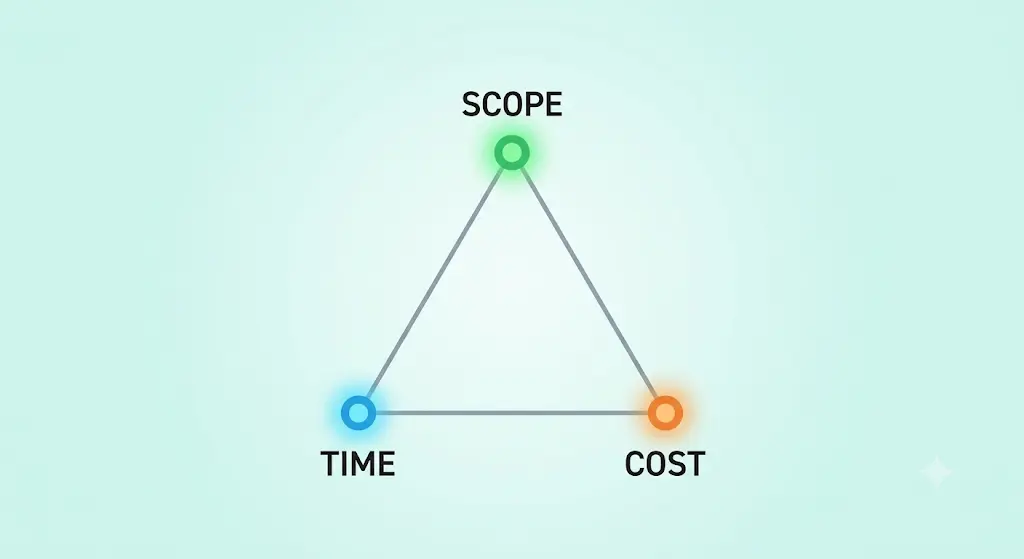
- Respect the Triangle: Every project is balanced on three legs: Scope, Time, and Cost. If you stretch the scope, you must adjust time or cost. You can't change one without affecting the others.
- Don't Reinvent the Wheel: Put business needs first. Before you spend weeks building a custom tool from scratch, check if there is an off-the-shelf hardware or software solution that gets you 90% of the way there.
2. Dedicate a "Gatekeeper" for Changes
People will always want to change things mid-project. The mistake isn't letting them ask, the mistake is not having a system to handle the requests.
- Appoint a Change Manager: Assign a specific person (or allocate dedicated hours) solely to evaluate, approve, or reject change requests.
- Use Requirements Software: Ditch the messy Google Docs or endless email threads. Use basic requirements management software to keep all project goals written, current, and accessible to everyone.
3. Standardize How You Gather Needs
If you ask ten different stakeholders what they want, you’ll get ten completely different answers. You need a consistent process to filter the noise.
- Match the Tool to the Project: Use stakeholder interviews, focus groups, or quick surveys depending on how big your audience is.
- Prioritize and Map: Use a simple Traceability Matrix to map every single requirement back to a core business goal. If a feature request doesn't map back to a core goal, it gets cut.
4. Keep Your Stakeholders in the Loop
A project should never be built in a dark room. If stakeholders only see the final product, they will want to change it.
- Demo Early, Demo Often: Set up regular meetings with clear agendas to show off working prototypes.
- Involve Them in Design: Use Joint Application Design (JAD) sessions or interactive prototyping. When stakeholders help shape the design early on, they feel ownership and are less likely to demand massive changes later.
5. Be Realistic About the Clock
The longer a project drags on, the more likely it is to suffer from scope creep.
- Under-Promise and Over-Deliver: Never promise a timeline that assumes absolutely everything will go perfectly. It won't.
- The Trade-off Rule: If a stakeholder insists on a new feature near a hard deadline, present them with the trade-off immediately: "We can add this, but what existing feature are we cutting to make room for it?"
Good luck all and don't sink under pressure!